
|
|
|
Golf Playing LessonsFrom this page, you can access playing lessons for various parts of the game. Click on the topics below and you'll be taken to the appropriate place in the website. Look below the navigation menu (the one below this sentence) for the specific page's content.
The Statistical
Significance of the
Short Game
|
CATEGORY |
Average Score
79 |
Average Score
91 |
Greens in Regulation
GIR |
8 |
2 |
% Fairways
Hit |
61 |
31 |
Iron Accuracy
% |
53 |
13 |
Shots no well
hit |
8.5 |
17.0 |
Putts per round |
31.7 |
35.7 |
The 79 shooter hits significantly more greens, partly because he hits more fairways to begin with; he simply strikes the golf ball better because of a better, more consistent swing. You'd think, however, that the 91 shooter would have fewer putts. Since he misses most greens, would he not then chip or wedge his ball closer to the hole than the 79 shooter would from the fairway? The fact is that the 91 shooter shoots 91 because he doesn't hit the ball as well, but, more importantly, he is even worse at recovering from missed greens.
Here's an interesting experiment to try. If you're a low handicapper, play with a high handicapper, and vice-versa. Once the low handicapper has made an attempt at hitting the green, have the high handicapper complete the hole. Likewise, once the high handicapper has made an attempt at hitting the green (this may be 3rd or 4th shot), have the low handicapper complete the hole. Do this on each hole and see what the total scores are? You'll find that the low handicapper's ball will score much higher than normal as the high handicapper's ball will score much lower.
Better players have better short games. Better players are better players because they have better short games. In terms of time investment, all players will lower their scores more significantly by working on their short games than their long games, especially higher handicappers. It would take significant practice for a 91 shooter to improve his swing and technique enough to go from hitting 2 greens (11%) a round to 4 greens (22%) a round. An 11% reduction is short game shots would be much easier to realize.
Good players have good short games. A good short game is even more important to a good player for consistent scoring. A 79 shooter takes on average 31.7 or 32 putts, which is 40% of his total strokes. A 91 shooter averages 35.7 or 36 putts, which is 39% of his total strokes. Putting is the most important aspect of the short game. It is your putting that can save the day. Putting is what all players should spend the most time trying to improve. Do you?
In coming weeks, I'll lay out some ways that you can improve your short game. My emphasis will be, of course, on providing you with information that will enable you to make better decisions on what kind of shot to play, and how to play it. I'll also share some of the swing/stroke techniques I use to maintain my 2 handicap, even though I rarely practice anymore.
If you have any questions or comments, feel free to email me at golfexpert@probablegolfinstruction.com
©Probable Golf Instruction, Ken Tannar 2001-2011. All Rights Reserved.
Langley, B.C. V2Y 2G4Phone: 604-539-7760 FAX: to fax, email an attachment
probablegolf@yahoo.ca or golfexpert@probablegolfinstruction.com
| GOLF SOFTWARE |
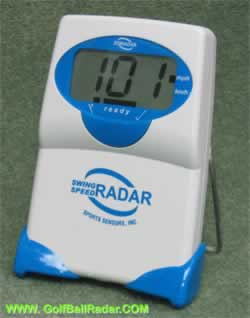
Power Meter measures Swing Speed
|




| GOLF NEWS |
|
| GOLF NEWSLETTER |
Statistics
·Putting
·Long Balls
·Games
·Handicap
·Scoring
·Shot Patterns
·Tournaments
·Tours

Pro Shop
·Ball Marker Engraved
·Books
·CDs & DVDs
·Green Reader
·Impact Labels
·Laser Rangefinder
·Longer Drives
·Products
·Teaching Aids
|
Subscribe to the Probable Golf Newsletter
and
|
| GOLF POLL |
The 19th Hole
·Advertising
·Ask the Golf Expert
·Consultation/Litigation
·FAQs
·Golf Blog
·Golf Draws
·Links
·Science of Golf
·Tell a Friend
·Testimonials
·

Golf Ball Finder Glasses
·
| GOLF CARTOON |
|
|